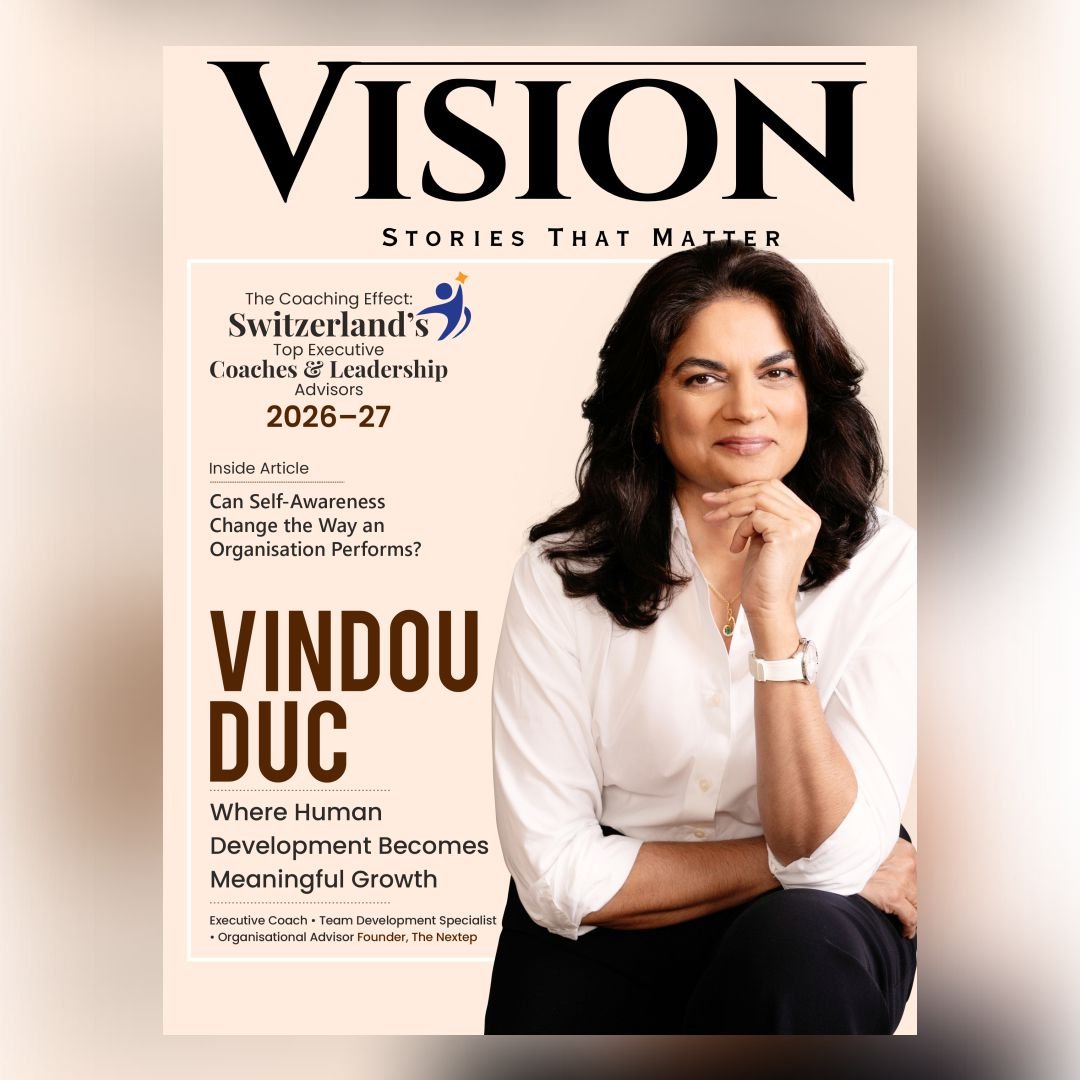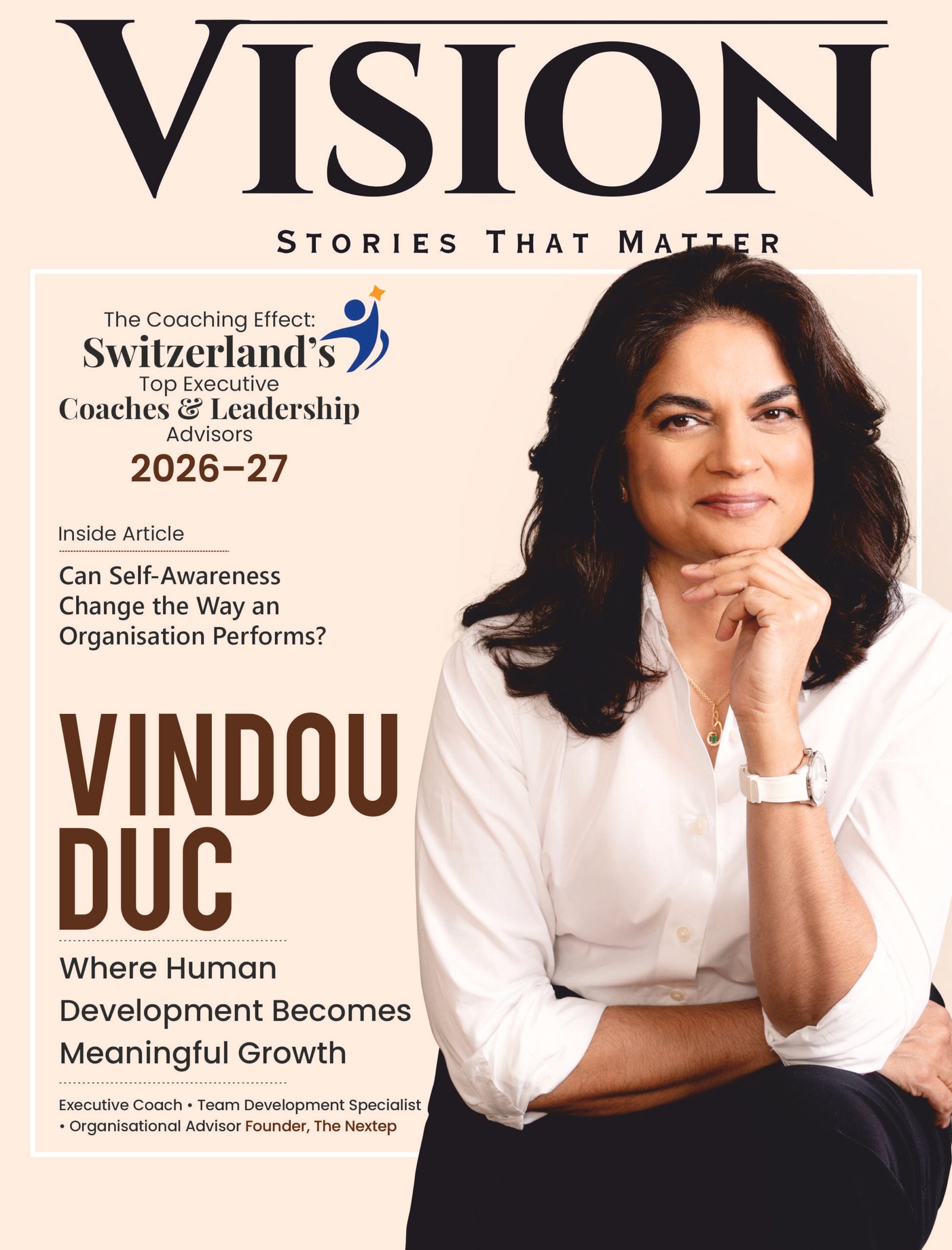


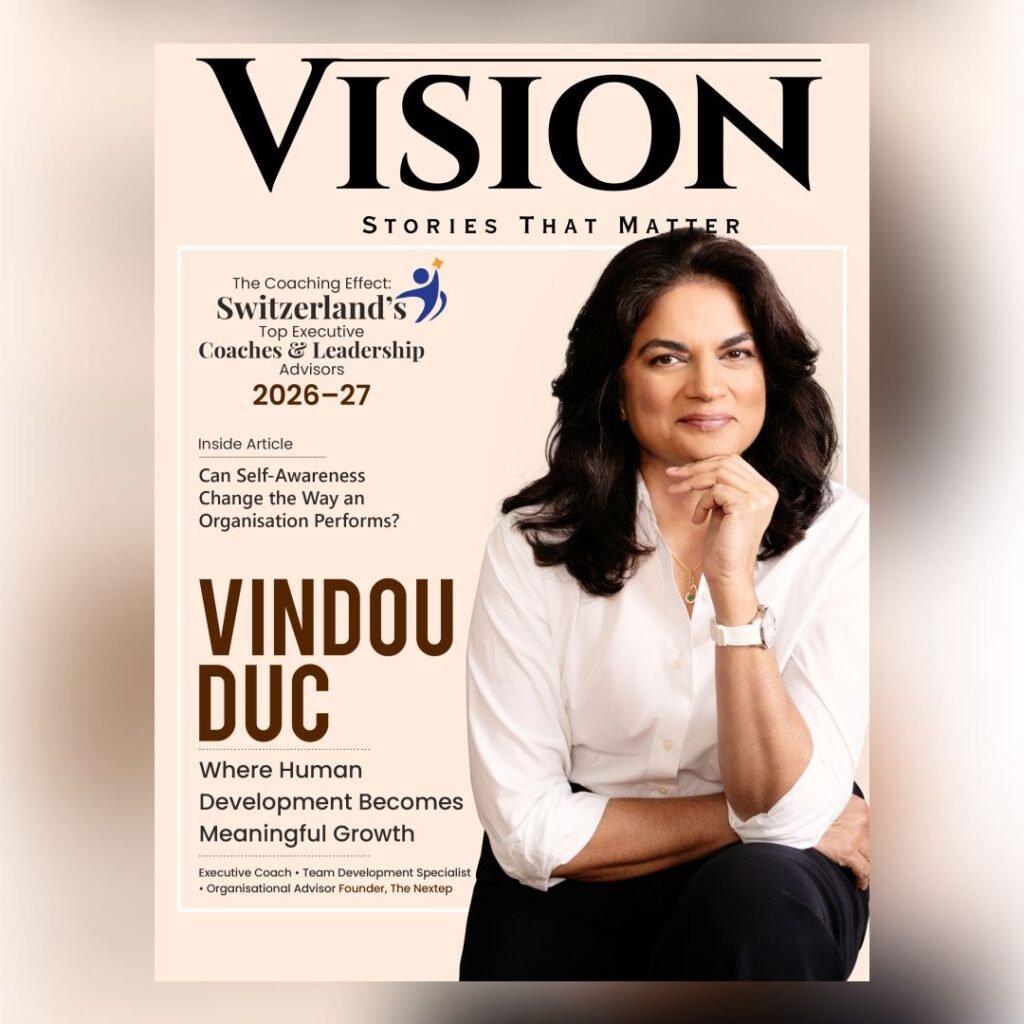
Through The Nextep, she brings executive coaching, team development and organisational advice into one conversation.
A strategy can look right on paper and still struggle to become part of everyday work. Vindou Duc saw this gap during her years across business, Human Resources, transformation and organisational development, where she watched organisations pursue strong strategies while people were often asked to adapt to systems that had never fully considered their experience.
That realisation became personal for Vindou. She felt that her own competencies were not being fully used in service of the organisation, while a fundamental value continued to matter deeply to her: the human being comes first. That tension led her to found The Nextep, where she could work more closely with leaders, teams and organisations on the human side of performance and change.
Her experience across global organisations had already taught her that leaders often see strategy, organisational charts and performance indicators, while employees experience decisions, conversations, priorities and the behaviours that receive recognition. Vindou began asking a different question: where does a person meet the strategy, and what does that encounter feel like?
This thinking formed her approach of working from the individual to the team and then to the organisation, helping leaders recognise their strengths and blind spots while creating healthier team dynamics and stronger alignment. Today, Vindou works as an executive and team coach and organisational advisor based in Switzerland, supporting leaders, teams and boards when their next chapter asks more of them than another plan or structure.
She also partners with PointNorth International on leadership assessments and programmes in positive team dynamics and transformation. Her focus remains deeply practical: helping leaders turn awareness into changed behaviour, teams discover what they can achieve together, and organisations make their values visible through everyday decisions, creating the foundation for meaningful performance.
Finding the Missing Piece
She founded The Nextep in 2008 because she could no longer ignore a gap she felt herself. Her different competencies were not being used fully in service of the organisation, and she found herself in conflict with a fundamental value: the human being comes first.
She had worked in business and HR and had seen excellent strategies fail to become lived reality. People were often asked to adapt to systems that had not been designed with them in mind. She wanted to bring those worlds together, to help organisations achieve results while taking seriously the people who make those results possible.
The Nextep gave her the freedom to work across coaching, team development and organisational advice. The name reflects a simple belief: progress begins when people understand where they are, choose where they want to go and take the next step with intention. That work also gave her a closer view of how differently an organisation can be experienced by the people leading it and the people working within it.
When Intent Meets Reality
The way an organisation looks from the leadership table can be very different from how it feels during an ordinary working day. The difference often becomes visible in small decisions, conversations and expectations that shape how people experience their work.
For Vindou, the gap is often in the everyday experience. Leaders see the strategy, the organisation chart and the performance indicators. Employees experience the organisation through decisions, conversations, priorities and the behaviour that is actually rewarded.
An organisation can say that collaboration matters, but if each function is measured only on its own results, people learn to protect their territory. It can say that employees are trusted, but if every decision is escalated, they learn to wait.
She asks leaders to look at the organisation from the employee’s position: where does the person meet the strategy, and what does that encounter feel like? Then she asks what value that experience creates for the customer. These questions make the distance between intention and reality visible. They also give leaders a practical starting point for closing it.
For Vindou, understanding that distance also means looking at more than the individual leader. The team, culture and wider organisation are part of the same picture.
From the Individual to the Organisation
Leadership rarely exists in isolation. The way one person behaves affects a team, while the team’s environment can influence how that person leads. Looking at only one part can therefore leave important pieces of the picture outside the conversation.
Vindou works from the individual to the team to the organisation, and back again. A leader becomes aware of their strengths, blind spots and effect on others. The team learns to trust one another, speak about what is difficult and align around a shared mission.
The organisation creates the conditions for those behaviours to last through its culture, structure and decisions. This movement is never one way: leaders shape a culture, and that culture shapes how people lead.
A beautifully coached leader will struggle if the organisation punishes initiative. A new structure will not break silos if the leadership team still avoids shared accountability.
Vindou wants leaders to lead as coaches, creating space for others to think and contribute. When individual growth strengthens the team, and the team can move the organisation, the whole becomes greater than the sum of its parts. That becomes especially important when leaders are expected to perform while dealing with uncertainty, change and increasingly complex demands from the people around them.
Leading Under Pressure
Leadership today can require several different responses at the same time. Leaders may need to move quickly, make difficult decisions, work with new technology and remain present for their people, often while circumstances continue to change around them.
Vindou sees many leaders being expected to move fast, stay composed, embrace technology, manage uncertainty and still be fully present for their people. The pressure can disconnect them from themselves.
They may become more controlling, withdraw from difficult conversations or confuse being busy with making progress. Her work starts by helping them pause and notice what is happening: What is this situation asking of me? What am I feeling? Which part of my response is a conscious choice, and which part is an old reflex?
She then connects that awareness to their values and to the impact they want to have. Authenticity, for her, is not a fixed leadership style. It is the ability to act in line with what matters to a person, even when circumstances demand a different approach.
From there, she helps them practise difficult conversations and decisions.
Sometimes, however, what appears to be an individual leadership difficulty keeps returning because something deeper within the organisation is creating the same conditions.
Looking Beyond the Individual
A problem that keeps appearing can tell a different story from a single performance issue. When the same difficulty follows people or teams, it becomes important to look at what surrounds them and what may be making the pattern difficult to change.
Vindou looks for repetition. When talented people keep encountering the same obstacle, or a team returns to the same conflict despite coaching and goodwill, she asks what in the system is producing that result.
Are roles and decision rights clear? Do incentives pull people together or apart? Can people challenge a decision safely? Are the leaders themselves aligned?
It is too easy to call someone a poor collaborator when the organisation has made collaboration difficult. In one growing company, her work on a competency model revealed a deeper question about values: what culture does the business want to preserve as it grows, and how will those values be lived?
They are connecting those values to competencies and leadership expectations so they can guide everyday choices. That is where an apparent people issue becomes an opportunity to shape the organisation.
This way of looking at organisations also informs how Vindou approaches the principles she places at the centre of leadership.
Making Empathy Practical
Words such as empathy, performance, impact and passion can mean different things depending on how they are used. Their real meaning becomes clearer when they influence the decisions people make and the expectations they set for others.
For Vindou, empathy and performance belong in the same conversation. Empathy means understanding the reality in which someone is being asked to perform. Performance means giving them clarity, feedback and the conditions to contribute.
Impact asks whether that contribution matters to colleagues, customers and the wider purpose. Passion gives people the energy to engage, but it needs direction.
She brings these ideas down to decisions: Who needs to be heard before action is taken? What are people being asked to own? What behaviour will leaders model? What will be measured or noticed to know that it works?
Her guiding question is, “Where is your employee in the process, and what is the value for your customer?” It prevents a people initiative from becoming detached from the business, and it prevents a business decision from forgetting the people who must bring it to life.
Those questions require a certain level of trust, particularly when the work involves leaders examining parts of their own behaviour that may be difficult to discuss elsewhere.
Creating Space for Honest Conversations
There are conversations leaders may find difficult to have within their own organisations. They may have to make decisions while carrying doubts, pressure or questions that rarely have an obvious place in the working day.
Trust begins for Vindou when a leader feels they can bring their whole situation into the room, without being reduced to a performance problem. She listens carefully and challenges honestly, with their permission and in service of their growth.
Often, they must go beneath the immediate leadership issue. In her Life Compass approach, they begin with the values a person cannot set aside. They explore their talents, including gifts they may take for granted, and the aspirations that draw them forward: who they want to be, what they want to do and what kind of contribution would make their life feel meaningful.
They then look for where those elements meet purpose and turn a chosen direction into action. That deeper work can reveal why a leader resists a decision or feels exhausted by a role that looks successful from the outside.
They still define observable progress: a conversation held, a choice made, changed behaviour and its effect on the team. Inner clarity must change how the leader lives and leads.
The same need for clarity becomes important when the conversation expands from an individual leader to a whole organisation going through transformation.
When Transformation Becomes Everyday Work
The announcement of a major change can create energy across an organisation. Keeping that energy alive is harder. Once the initial attention passes, people return to their usual routines, relationships and ways of making decisions.
For Vindou, transformation lasts when people believe in the project and can see their place in it. A strategy may be rationally compelling, but people also need to understand what it means for them, what may be lost and what becomes possible.
Resistance is often information. It can show what has not yet been heard, explained or made credible. She helps leaders create space to acknowledge that reality, then involve people in shaping how the change will work.
Accepting and welcoming change cannot be commanded. It grows when leaders embody the direction themselves, make decisions consistent with it and allow teams to contribute rather than simply comply.
Finally, the change has to enter the culture: how people collaborate, whom they hire and develop, what they celebrate and what they stop tolerating. If those everyday signals remain the same, the initiative fades.
The decisive test comes months later: do people still speak and act differently when the launch is over and pressure returns? If they do, the change has moved from a project into the organisation’s identity. When belief, participation and culture reinforce one another, transformation becomes a new way of working.
That work becomes more complex when the people involved come from different countries, cultures and ways of understanding leadership.
Understanding Different Perspectives
Working across countries means encountering different expectations around authority, communication and relationships. A response that seems clear in one setting can carry a very different meaning in another, which makes curiosity important when working with people from different backgrounds.
Working across countries and sectors has taught Vindou that leadership is a relationship, not a script. Her own multicultural background helps her stay curious about the meaning people give to authority, trust, feedback and disagreement.
A silence in one context may signal respect; in another, it may mean that people do not feel safe enough to speak. She tries to ask before she interprets.
Leaders can be adaptable without losing themselves by being steady on values and flexible in how they express them. They can be clear about the principles that will guide a decision, then learn how people in that team need to be involved and heard.
She encourages leaders to invite the voices that are easiest to overlook. They should check what people understood, not just what they intended to say. Consistency, for Vindou, is something others experience in a leader’s integrity rather than in identical behaviour everywhere.
That ability to adapt without losing the human side of leadership is becoming even more relevant as technology changes the way organisations work.
Keeping Leadership Human
Technology is changing what organisations can do and how quickly they can work with information. It also raises questions about what people will continue to need from those leading them as more parts of work become technology-driven.
Vindou believes AI will change how organisations analyse, decide and organise work. Precisely because machines can do more, leaders will need to be more human: more connected to themselves, more attuned to emotions and more deliberate about creating moments of true connection.
People need to know that someone sees them, listens to them and understands what a change means in their lives. “An AI-generated answer cannot replace the trust created when a leader stays present in a difficult conversation,” says Vindou.
Coaches and advisors must evolve too. They should understand technology and the business choices it enables while helping leaders examine the human consequences: What becomes easier? What feels threatened? Where does judgement, care or belonging need more attention?
Her partnership with PointNorth International further deepens this realisation by giving leaders and their teams the understanding and tools they need to navigate these changes.
For Vindou, the work ahead is to help leaders use new capabilities wisely while deepening, rather than outsourcing, their responsibility for human connection.