


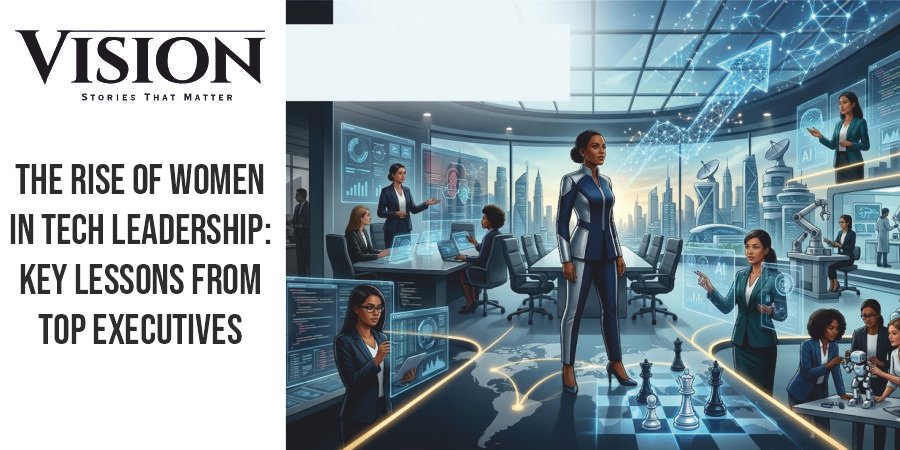
For decades, the technology industry was shaped by a narrow leadership model. Technical expertise mattered, but leadership itself often looked the same across boardrooms, engineering teams, and startup ecosystems. That picture is slowly changing. Women are stepping into senior leadership roles across software, AI, cybersecurity, cloud computing, and enterprise technology, bringing a leadership style that is reshaping how modern companies grow, innovate, and retain talent.
The shift is still incomplete. Women hold only a small percentage of technical executive roles globally, and representation drops sharply at the senior leadership level. Recent industry reports show women occupy less than one-third of leadership positions in tech, while technical leadership roles remain significantly male-dominated.
Yet the momentum is impossible to ignore. From Fortune 500 executives to startup founders, women leaders are influencing how technology businesses approach culture, innovation, customer experience, and long-term growth.
Why Women Leaders are Changing the Tech Industry
The conversation around women in technology leadership is no longer centered only on representation. Businesses are increasingly recognizing the measurable impact diverse leadership teams have on performance and innovation.
Tech companies today operate in an environment shaped by AI disruption, cybersecurity risks, hybrid work models, and rapid product cycles. Leadership now requires emotional intelligence, adaptability, communication, and strategic thinking alongside technical expertise.
Many successful women executives have excelled precisely because they combine technical understanding with collaborative leadership.
Executives like Susan Wojcicki, Safra Catz, and Ginni Rometty helped redefine leadership in technology by focusing not only on product innovation but also on organizational resilience, customer trust, and workforce transformation.
Their careers reveal an important shift happening inside the industry. Technical leadership is no longer only about managing systems. It is about managing people during constant technological change.
Lesson 1: Technical Skills Alone are Not Enough
One of the biggest lessons emerging from top women executives is that career growth in technology increasingly depends on communication and strategic influence.
Many women leaders in tech built their careers by translating complex technical ideas into business outcomes. That ability becomes critical at the executive level, where decisions affect customers, investors, employees, and regulators simultaneously.
This is especially relevant in AI and cybersecurity, where companies need leaders who can explain risk, ethics, and innovation in practical business language.
The stereotype of the isolated technical genius is fading. Modern tech leadership rewards executives who can align engineering, operations, marketing, and customer experience under one vision.
For professionals hoping to move into leadership, this means developing:
- Executive communication skills
- Cross-functional collaboration
- Decision-making under uncertainty
- Emotional intelligence
- Business strategy awareness
The executives advancing fastest today are often those who can bridge technical expertise with human leadership.
Lesson 2: Mentorship Accelerates Career Growth
A recurring theme among women tech leaders is the importance of mentorship and sponsorship.
Research consistently shows that women in technology face barriers during mid-career advancement, especially during the transition into management roles. Industry studies describe this as the “broken rung,” where women are promoted at lower rates than male peers during early leadership stages.
Many successful executives credit mentors who advocated for them during pivotal career moments.
Mentorship matters because the technology industry often rewards visibility as much as performance. Skilled professionals can remain overlooked if leadership potential is not recognized internally.
Top executives frequently advise women in tech to actively seek:
- Senior mentors inside their organization
- External industry networks
- Leadership coaching opportunities
- High-visibility projects
- Sponsors who advocate during promotion discussions
This lesson applies across the broader workforce as well. Companies that build strong mentorship pipelines tend to retain more women in technical and leadership roles over time.
Lesson 3: Inclusive Leadership Improves Innovation
The strongest technology companies understand that innovation suffers when leadership perspectives remain limited.
Women executives often bring leadership approaches that prioritize inclusion, collaboration, and employee engagement. That does not simply improve workplace culture. It directly impacts business outcomes.
Research increasingly links diverse leadership teams with stronger creativity, better problem-solving, and improved financial performance. Tech products built by diverse teams are also more likely to reflect the needs of broader customer groups.
This matters significantly in areas like artificial intelligence and machine learning, where biased decision-making can have real-world consequences.
Leadership diversity improves product design because it reduces blind spots.
Companies ignoring inclusion increasingly face retention problems as well. Recent reports show many women leave tech careers due to poor leadership culture, limited advancement opportunities, and lack of belonging.
The organizations winning talent today are often those building leadership cultures where employees feel heard, supported, and respected.
Lesson 4: Resilience is a Competitive Advantage
Women executives in tech frequently speak about resilience, not as motivational language, but as a professional survival skill.
Technology moves quickly. Markets shift overnight. Entire business models become obsolete within years. Leaders must adapt continuously.
For many women, resilience also includes navigating industries where representation remains uneven. Women continue to face pay gaps, promotion disparities, and leadership bias in technology sectors.
The executives who rise despite those barriers often develop exceptional adaptability, negotiation skills, and long-term strategic thinking.
That resilience becomes valuable during periods of disruption, whether companies are managing layoffs, AI transformation, cybersecurity crises, or economic uncertainty.
Modern leadership increasingly rewards people who remain calm, decisive, and people-focused during instability.
The Future of Women in Tech Leadership
The next decade could become a defining period for women leaders in technology.
AI, cloud computing, health tech, fintech, and cybersecurity are creating entirely new leadership opportunities. At the same time, younger professionals entering the workforce increasingly expect inclusive leadership cultures and transparent career pathways.
Progress is still uneven. Women remain underrepresented in executive technical roles, especially at the CTO and founder level.
But the direction is clear.
The rise of women in tech leadership is not simply about representation statistics anymore. It reflects a deeper transformation in how leadership itself is defined inside the modern technology industry.
The executives shaping the future are those who can balance innovation with empathy, technical expertise with communication, and rapid growth with sustainable culture.
That combination is becoming one of the most valuable leadership assets in technology today.