


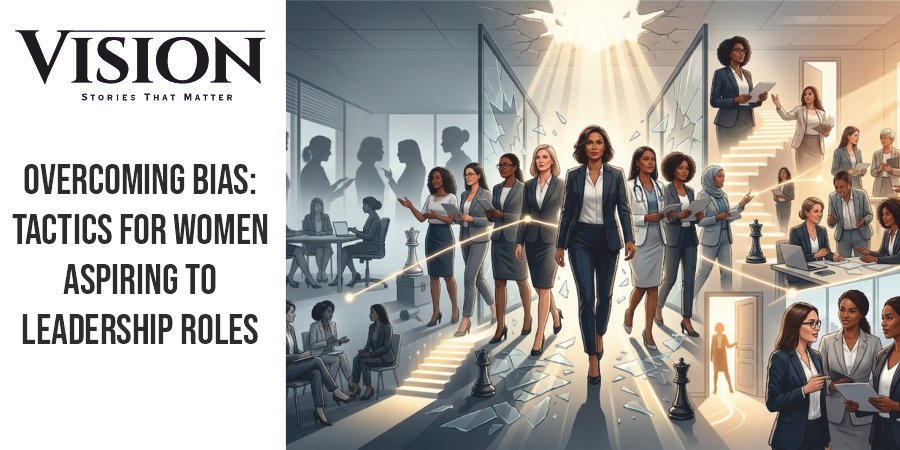
A woman can deliver strong results for years, lead projects under pressure, and still walk into meetings where her ideas are questioned until a male colleague repeats them. That disconnect sits at the center of the leadership gap many women in corporate America continue to face.
The issue is no longer about whether women are capable of leading. Most organizations publicly support gender diversity. The real challenge is how bias quietly shapes hiring, promotions, visibility, and decision-making behind the scenes.
Research continues to show the gap. Women made up 46% of managers in the U.S. in recent workforce data, yet representation sharply declines in senior leadership and C-suite positions. McKinsey and Lean In’s workplace research also found that women continue to face slower early-career promotions, fewer sponsors, and greater burnout at senior levels.
For women aiming for executive roles, understanding how bias operates is no longer optional. It is part of leadership strategy.
Recognize the “Broken Rung” Early
Many leadership conversations focus on the glass ceiling. In reality, the bigger problem often appears much earlier.
Researchers call it the “broken rung,” the point where women are less likely than men to receive their first promotion into management. Once that first advancement is delayed, the leadership pipeline narrows year after year.
This matters because promotions are cumulative. A delayed move at age 30 can become a missing executive title at age 45.
Women who want leadership positions need to approach career progression intentionally instead of assuming performance alone will get noticed.
That means:
- Asking directly about promotion timelines
- Tracking measurable wins
- Documenting leadership contributions
- Making achievements visible to decision-makers
Visibility is often uncomfortable for high performers who were taught to “let the work speak for itself.” In many workplaces, it does not.
Stop Confusing Mentorship With Sponsorship
Many women receive mentorship. Far fewer receive sponsorship.
A mentor offers advice. A sponsor actively advocates for opportunities behind closed doors. That distinction changes careers.
Research consistently shows women are less likely to have influential sponsors pushing for stretch assignments and promotions.
Leadership opportunities are frequently decided before a job is publicly posted. Executives discuss who seems “ready,” who appears confident, and who fits leadership culture. Sponsors shape those conversations.
Women aspiring to leadership should build relationships with senior leaders who:
- Recommend them for visible projects
- Mention their names in succession planning discussions
- Advocate for compensation and advancement
- Create access to executive-level networks
This requires strategic networking, not just social networking.
Being excellent at work is important. Being known by influential decision-makers is equally important.
Learn How Bias Actually Appears at Work
Bias in leadership rarely looks obvious anymore.
It often appears through smaller patterns:
- Women being described as “aggressive” for direct communication
- Leadership potential being associated with stereotypically masculine behavior
- Mothers being perceived as less committed
- Women receiving vague feedback instead of actionable promotion criteria
- Male employees being judged on potential while women are judged on proven experience
Harvard research found women are less likely to apply for promotions even with equal qualifications, especially when role expectations are unclear.
That hesitation is not a confidence flaw in isolation. It is often a learned response to workplace systems that scrutinize women more heavily.
Understanding these patterns helps women avoid internalizing structural problems as personal failures.
Build Executive Presence Without Mimicking Men
One of the biggest mistakes ambitious professionals make is trying to imitate dominant leadership styles that do not feel natural.
Executive presence is not about sounding louder or becoming emotionally detached. It is about creating trust, clarity, and authority in high-pressure situations.
Strong leaders:
- Speak with clarity under scrutiny
- Make decisions confidently
- Handle disagreement calmly
- Communicate priorities clearly
- Maintain composure during conflict
Women are often pushed into a difficult balancing act where being collaborative can be perceived as weak, while being assertive may trigger criticism.
The solution is not personality transformation. It is communication precision.
For example:
- Replace apologetic language with direct statements
- Stop over-explaining every decision
- Speak early in meetings instead of waiting for the “perfect” moment
- Use data and outcomes to reinforce authority
Leadership presence grows through repetition and exposure, not perfection.
Make Career Risk a Strategic Habit
Many leadership roles come from taking visible risks.
Women are often encouraged to be prepared before stepping forward. Men are more likely to pursue opportunities while still learning on the job.
That difference compounds over time.
Taking strategic risks may include:
- Applying for roles before feeling fully ready
- Leading high-stakes projects
- Managing larger teams
- Negotiating compensation aggressively
- Entering industries or departments with fewer women leaders
Career growth rarely happens inside complete comfort.
The professionals who advance fastest are often the ones willing to tolerate temporary uncertainty.
Choose Companies Carefully
Not every workplace deserves long-term loyalty.
Some organizations publicly celebrate diversity while privately rewarding outdated leadership norms. Others actively invest in women’s advancement through sponsorship programs, equitable promotion systems, and leadership development pipelines.
Pay attention to signals:
- How many women hold executive positions?
- Are women leading revenue-driving departments?
- Do women stay long-term?
- Are promotions transparent?
- Does leadership reward outcomes or office politics?
A workplace culture can accelerate leadership growth or quietly stall it for years.
Leadership is Still Being Redefined
The image of leadership in America is changing slowly, but it is changing.
Today’s strongest leaders are increasingly valued for emotional intelligence, adaptability, collaboration, and communication under pressure. Those qualities are not secondary leadership skills anymore. They are becoming central to how modern organizations operate.
Women entering leadership today are not simply trying to fit into old systems. Many are actively reshaping what leadership looks like for the next generation.
The bias has not disappeared. But neither has the momentum.


