
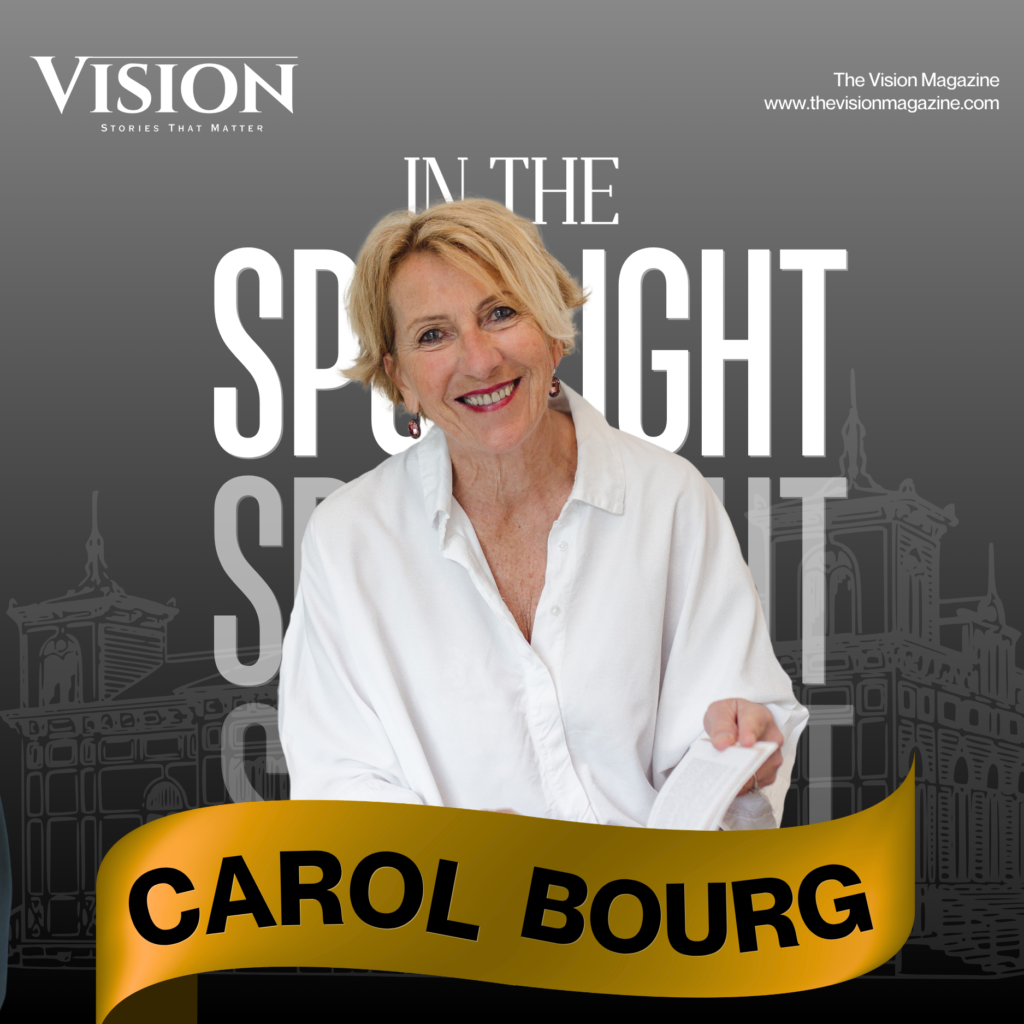
Most people move through life following paths shaped by others, ticking boxes, meeting expectations, and realizing much later that the direction never truly felt like their own. That quiet realization carries a weight that is hard to ignore. It raises a simple question that lingers longer than comfort ever does: if you are not leading your own life intentionally, who is?
Let’s admit that there is no shortage on methodologies and models to manage your own destiny. But where do you get the energy to apply these tools? How do you manage the stress linked to changing your habits and overcoming obstacles? That’s what Carol Bourg is adding in an innovative combination to get the physical and mental energy to apply these tools and stay in the driver seat.
Carol sees self-leadership and happiness as enablers. She believes the journey matters more than the destination, because a journey is made of many stages, and at each stage, it is up to each of us to decide what to do, even when it feels uncomfortable.
The Roots of a Global Outlook
A global and inclusive leadership philosophy rarely comes from theory alone. It is shaped by upbringing, exposure, and the influence of early role models. Carol’s approach to self-leadership is deeply rooted in the environment she grew up in and the choices she made along the way.
“My mother was a caring mother, my father a successful entrepreneur. They shared educational tasks and deeply respected each other. They had a happy life and stayed married for 70 years.
They were my first role models. My mother was a caring and loving housewife who created a nurturing environment. Yet, she was aware that times and women’s aspirations had changed and was keen to see her daughter follow her own path; my father was fair and supportive, provided me with protection and permission to grow as an autonomous and responsible young adult.”
At aged 20, Carol graduated in translation, was hired by the Brussels international branch office of an American Company, emerged as a young talent, and was sent to the US for a one year training in Sales. She took an MBA and managed Big Accounts operating in challenging environments like Africa and the Middle East. She was 27 when she fell in love, quitted her job and moved back to the States… this time for her partner’s career.
This first turning point was followed by many others in her journey. She illustrates just three that have shaped who she is and what she does today.
“1990s. I had difficulty conceiving our second child. Thanks to a nutritionist specialized in Traditional Chinese Medicine, I understood that body and mind were closely linked and that stress, diet, and lifestyle were crucial to a healthy and therefore happy life.
After 3 months of treatment (diet and supplements), I was pregnant again. I was so impressed that, some years later, I decided to delve deeper and train in the fascinating Chinese Law of the Five Elements, applied to the Mediterranean diet that had become part of our daily life.”
She passed this new lifestyle on to her whole family, thus gaining physical, intellectual, and emotional energy. She later became a naturopath and psychosomatic counsellor.
2000s. Elected president of the Professional Women’s Association of Rome for five years.
“This experience greatly contributed to my commitment to promoting an environment where women can thrive professionally while balancing their family responsibilities, thus fostering a culture of inclusion, diversity, and equity.”
- She discovered and trained in the Process Communication Model® (PCM), a model that allowed her to simplify human complexity and manage stress by understanding her own preferences, aspirations and motivations and find the common thread that guide her life choices.
“Amazingly, PCM made it clear to me that everything I had learned and undertaken on my journey made sense and was aligned with my energizing, spontaneous, creative and playful personality. In my own way, I had been the protagonist of my own unique and personal life journey.”
Today, she belongs to the small international community of Master PCM Trainers and Coaches and continues her lifelong continuous learning journey with a course on Neuromindfulness and naturopathic master classes to better serve her clients.
Generations at Work
Workplace discussions often frame generational differences as problems to fix. Carol sees something else. She points to a lack of dialogue rather than a lack of capability.
What she sees is more a need for conversation across generations than an issue that each generation needs to solve.
Surrounding conditions and environments have drastically changed. Yesterday’s habits and solutions are outdated. Opportunities and challenges are totally different. The concept of happiness has also evolved, and work-life integration may sound more relevant to the young generations than work-life balance.
In her “self-coaching book, my happiness is now,” she shares a tool called GAME that measures the degree of satisfaction regarding 4 dimensions of life: personal growth, achievements, meaning, and enjoyment. Her feeling is that today’s generation is more demanding and will not compromise on any of these 4 dimensions.
“I doubt that most baby boomers’ executives share that vision of life.”
To have those conversations, she joined WILL SOCIETY, an intergenerational ecosystem dedicated to individual and collective human transformation.
When Frustration Looks Like Burnout
Burnout is often spoken about loosely, but Carol draws a clear line between coaching and clinical intervention, while still addressing the patterns that lead individuals toward exhaustion.
As a coach and counsellor, she is not equipped to deal with burnout, which requires a multi-faceted therapeutic approach.
This said, what is extremely useful to her clients who feel frustrated, discouraged or desperate is the deep knowledge they acquire of themselves and their functioning mode when they take the PCM questionnaire and receive their personal debrief. That, per se, often reveals the how and the why of mental, emotional, and physical exhaustion that may lead to burnout and depression.
“I remember coaching a team leader who was extremely frustrated to do the job of her team members, therefore missing a declared opportunity to be promoted to a higher responsibility. She felt trapped.”
When she realized she was part of the problem, as she thought she could do the job faster and better than most of them and had difficulty to delegate, she stepped back, offered guidance, and handed over responsibility and accountability to discover her team was capable and dependable.
Her following 360 showed a clear improvement in her leadership capacities, and the road to a promotion was cleared of any obstacle.”
Why PCM Changes How Teams Function
Teams often struggle not because of a lack of skills and competences, but because differences in perceptions and abilities are undervalued, misunderstood and lead to mis-communication among team members.
Carol’s work with PCM centres on making those differences visible and usable to boost collective intelligence and team performance.
Diversity in a team makes it stronger, smarter, more efficient although harder to manage. This is where PCM acts as a game changer as it helps decoding signals and behaviors under stress and offers 6 (only 6) interaction modes to lower stress levels immediately, connect to the interlocutor, and re-establish effective communication.
“We are all different and all ok. Once one understands that each individual has a preferred environment, channel of communication, management style, and motivational needs, it is up to them to use the PCM tools to lead efficiently.
Less stress and better performance come along naturally, and leadership capacities are widely recognized and appreciated.”
Energy is not Abstract. It is Biological.
Performance is often treated as a mental discipline, but Carol ties it directly to physiology, particularly the relationship between nutrition and brain function.
QI (from Traditional Chinese) stands for energy. Energy that one inherits, energy that one creates through cell oxygenation (physical and breathing exercises), and energy that feeds the body and brain through nutrition.
Research has established that what one eats has an impact on the production of hormones that influence physical, mental, and emotional energy. It all happens through the interaction between the first and second brain, i.e., the microbioma, that are connected through a …….
What happens next depends on intakes.
WHAT HAPPENS?
The microbioma is alive, sensitive to food, aliments in general, and to stress, our emotional state.
- Fast-releasing sugar carbs, saturated, trans oils & fats, chemical residues, colourings, and other food/drink related substances create a lot of acidity, inflammation, fatigue, and accelerated aging.
- Feeling angry, sad, irritated, frustrated, under pressure, overwhelmed, scared, anxious, and not doing anything with those feelings is a big source of stress that impacts the microbiome.
ON THE OPPOSITE
- Give your microbiome good carbs, essential fatty acids, and the right amount of proteins and it will be happy and send a positive message – via neurotransmitters- to your brain.
- The brain will command to release some hormones.
Which ones?
- Serotonin (happiness), dopamine (motivation), endorphins (natural pain killers and mood boosters), GABA (calm and against anxiety), melatonin (sleep)… resulting in a good mood, active, motivated, concentrated state of mind, and good sleep.
Resilience is not Built Under Pressure. It was built before it.
Leadership resilience is often treated as a response to pressure. In Carol’s work, it begins earlier, with self-awareness and consistency in how one leads and lives.
Coaching with the Process Communication Model helps leaders to drive sustainable performance in two ways.
- First, to be in touch with who they really are, to develop their own leadership style, and be true to themselves is the only sustainable life position.
- Second, to be respectful of others, open and flexible, and develop what is called individualized leadership, to connect and motivate each member of the team.
The benefits are mutual and create a psychologically safe place to work and the right climate to foster team spirit and teamwork.
In addition, adopting a healthy lifestyle and a self-caring attitude enhances physical, mental and emotional resilience and reinforces self-confidence and self-esteem.
Transitions Demand Structure and Motivation
Career transitions often look like moments of uncertainty from the outside, but in Carol’s work, they follow a structured path built on clarity and accountability.
She offers a structured journey in several stages, using solid models such as the Process Communication Model® and effective processes like the MAP (My Authentic Path) Wheel to integrate the changes that each person wants to make, developing and building solid self-esteem, and achieving happiness.
“I see myself as a compassionate yet demanding partner who accompanies, supports, and also challenges the coachee to define his or her life project and achieve SMART objectives and KPIs that have been identified.”
How Teams Move from Polite to Cohesive
Team cohesion does not emerge automatically. It requires deliberate reflection on values, alignment, and everyday behaviour. Carol approaches this through a format that encourages participation rather than passive agreement.
She has developed a workshop, a sort of speed dating activity that is both engaging and very efficient. It aims to clarify and eventually agree on several points.
- What values define the company culture?
- How each individual is aligned with these values.
- What is missing for them to feel engaged and committed?
- How company values and culture translate into everyday behaviours and attitudes.
Of course, sharing PCM profiles in a team building workshop has proven to be a powerful means to create acceptance, curiosity, cohesion, and inclusion.
Well-Being: A Priority Which Still Struggles in Practice
There is growing awareness around well-being at work, yet Carol points to a gap between what is acknowledged and what is actually experienced.
The need for work-life integration and self-realization is more widely felt, yet not met in the workplace.
Although companies have implemented home working days, mentoring programs, training initiatives, and team-building activities to support their executives, time, budget, and workload constraints often make it difficult to see real benefits.
“Some companies manage better than others, but I do not see a global shift yet. It remains the responsibility of each individual to find solutions to live a happy life.”
As a consequence, in Belgium, depression and burnout have increased by as much as 44 percent, and absenteeism and long leaves of absence have reached high levels, making it more difficult for executives to balance well-being and performance.
What Changes After Coaching
The impact of coaching becomes visible not only in immediate feedback but in sustained behavioural change over time.
PCM acts as a real emotional intelligence booster, while QiNutrition supports mental, physical, and emotional energy.
“At EPAM Systems Belgium, managers thoroughly enjoyed a session organized around food and energy. Feedback described them as eye opening, valuable, clear, practical, and engaging.”
“At American Express Italy, PCM became part of the culture after multiple training and coaching sessions over three years. QiNutrition was integrated into a Growth Mindset workshop.”
“At Generali Group France, a PCM-based leadership program gained enough traction to be deployed at local levels in Italy.”
“A particularly distinctive experience came from a year-long training program conducted at Gucci.”
It is quite exceptional in the training business to observe that one year after training, 75% of managers used PCM at least several times a week. After two years, 56% continued to do so. This survey, conducted in 2020 among 500 participants across several European countries, showed that the change in behaviour and mindset was both immediate and long-lasting.
Greater team spirit, cohesion, and teamwork reduced conflictual situations and lowered stress levels.
Turning Personal Struggles Into Collective Change
Advice often becomes abstract at senior levels. Carol keeps it direct and personal.
“Be the change you want to see and promote in others.”
She positions leadership as something that begins with individual behaviour rather than organizational mandates. Authenticity and courage are not presented as ideals but as requirements for influence.
She closes with a line that reflects how change actually spreads within teams: “People change when you change.”