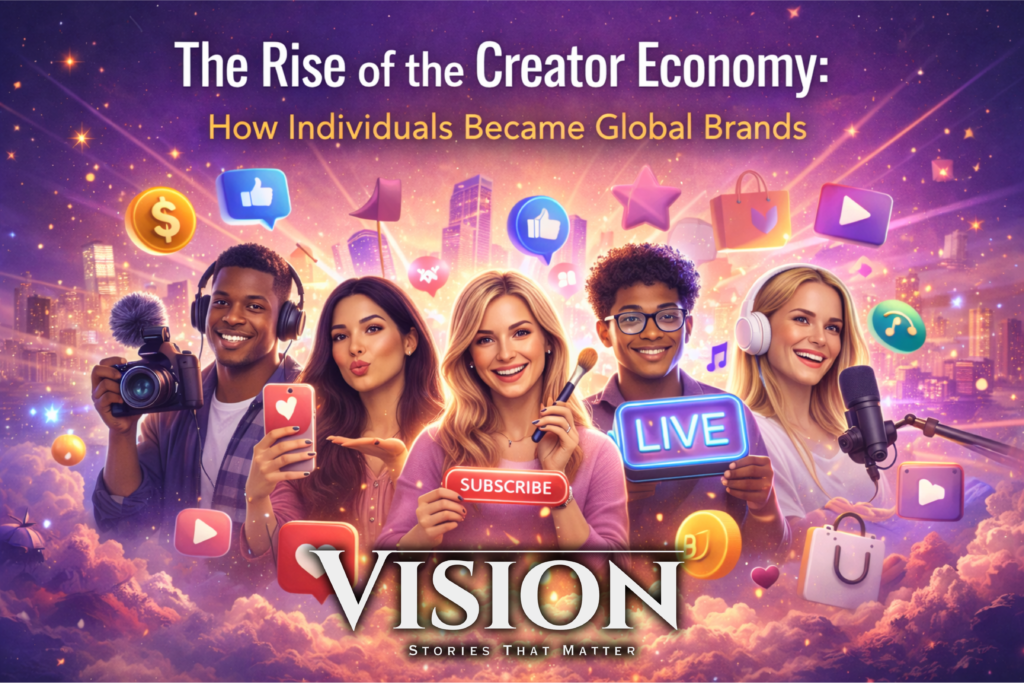
A few years ago, being a “content creator” was considered a mere hobby. Today, it is a multi-billion-dollar economy that is transforming the world of advertising, media, entrepreneurship, and even identity.
The creator economy did not suddenly go boom. It grew quietly, fueled by smartphones, social media platforms, and a generation that realized they did not need traditional gatekeepers to make their mark. Musicians no longer need record labels. Writers no longer need publishing houses. Teachers no longer need classrooms. People now have direct access to the world.
The most revolutionary thing about the creator economy is not reach but ownership. Creators own their voice, their narrative, and increasingly, their income streams. Creators are building businesses around their personalities and expertise through brand partnerships, digital products, online courses, paid communities, and subscription services. People are building businesses around their personalities and expertise.
In 2026, creators are no longer restricted to the entertainment industry. Doctors create health awareness content. Lawyers break down legal knowledge for the masses. Finance experts teach investment literacy through short videos. Psychologists talk freely about mental wellness. Knowledge is becoming more accessible because experts are entering digital spaces with authenticity.
This change has also impacted the way brands function. Brands are spending more on influencer collaborations than on advertising campaigns. Why? Because people trust individuals more than an advertisement. A word of mouth from a trusted source means more than a billboard in a downtown area.
But the creator economy is not all rainbows and unicorns. The need to stay relevant can be draining. The algorithms are unpredictable. The earnings can be volatile. The line between the personal and professional life can be emotionally taxing.
But despite all this, millions of people are still trying to make it in the content creation space because it gives them something that a regular job does not – freedom. They get to choose the time, the topic, and the direction of their content. They are building an online property that can reach a global audience.
The most successful creators are those who have the ability to move from content to community. They create tribes, not just audiences. They provide value, not just visibility. And they understand that sustainability is not just about virality, but also strategy.
The creator economy is the signal of a larger shift in the way that society thinks about work. Work is no longer something that happens in an office. Influence, knowledge, creativity, and storytelling are now recognized as legitimate economic assets.
People are no longer just consumers of media. They are producers, distributors, and entrepreneurs, The future of business may not be created by corporations alone, but by individuals who have a camera, a vision, and the guts to share it.