

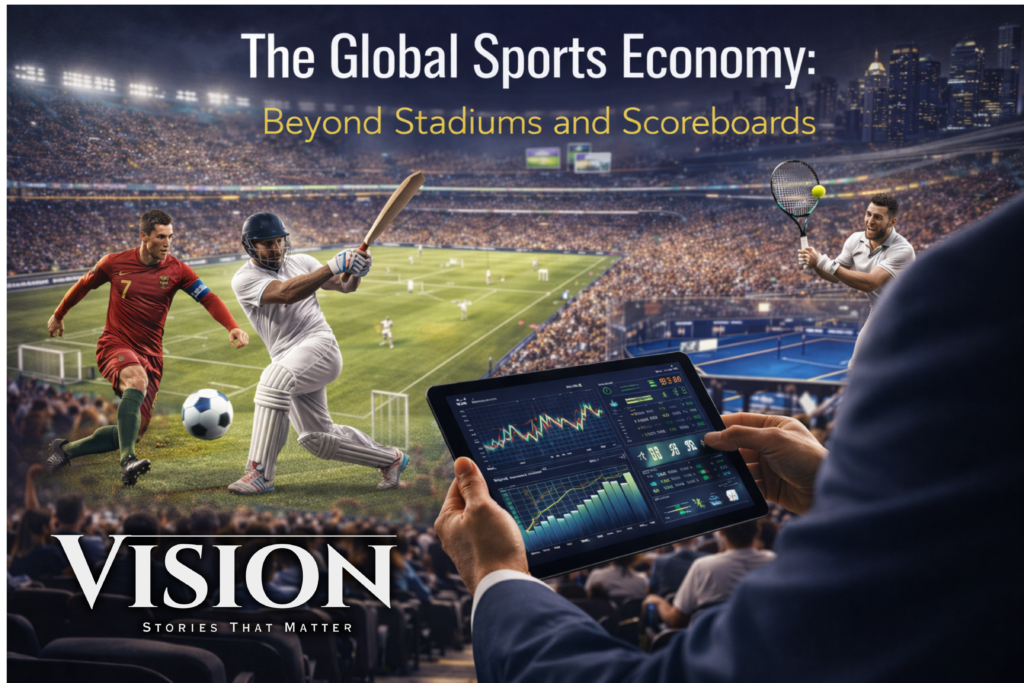
Sports have always been a uniting factor for people emotionally. However, in the year 2026, sports are no longer a cultural phenomenon but an economic force that shapes the global markets.
Whether it is football in Europe, cricket in South Asia, basketball in North America, or the growing sports industry in Africa and the Middle East, the global sports economy is growing at an unprecedented pace.
The broadcasting rights alone account for billions of dollars every year. The streaming services are competing fiercely for the live sports broadcasting rights because, in the digital age, viewership is one of the few remaining large-scale audience pullers.
However, the economic ecosystem is much more complex than the broadcasting rights.
The sports tourism industry is growing at a rapid pace. The international sports events trigger the hospitality, aviation, retail, and infrastructure development industries. The cities that host international sports events experience a long-term brand boost on the global map.
Sports personalities are also turning into global brands. Endorsements, personal media productions, fashion lines, and charitable foundations are opening up new avenues of income. Social media has enabled sports personalities to connect with their fans directly, turning them from sports personalities into cultural icons.
Investment patterns are also undergoing a transformation. Private equity companies and international investors are buying shares in sports clubs, leagues, and sports technology startups. Data analytics firms that specialize in performance analysis are attracting huge investments. Esports are growing at a rapid pace, integrating gaming and sports in a manner that was unthinkable a decade ago.
However, commercialization also poses many questions. The cost of tickets is increasing. Grassroots sports face funding challenges while professional leagues are thriving. There are transparency issues in the governance structure of some regions.
However, one thing is clear: sports are one of the only universal languages that can be understood beyond borders, politics, and cultures.
The sports economy is not merely about competition.
It is about identity, entertainment, national pride, and multi-billion-dollar strategy.
When the final whistle blows, the world is watching.
And what happens behind every match is an industry that is influencing economies beyond the playing fields.