


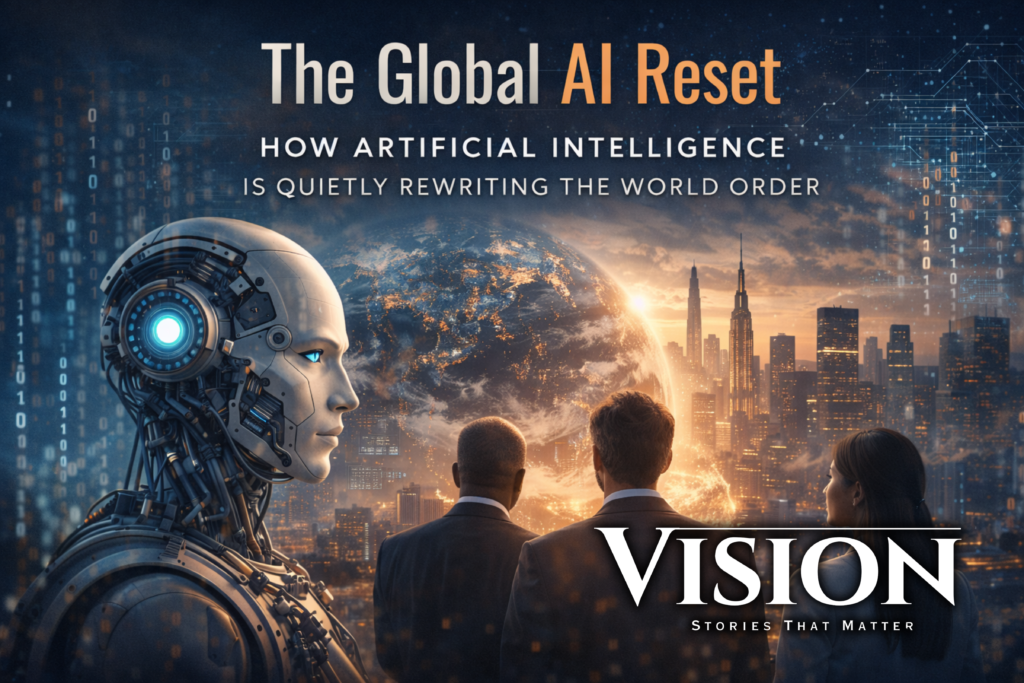
Artificial Intelligence is no longer a topic of debate in research labs and science fiction novels. It is already a reality that is embedded in our smartphones, driving businesses, shaping financial markets, swaying elections, and changing the face of healthcare systems around the world. What started as a technological innovation has now become a geopolitical reality, an economic disruptor, and a cultural catalyst that is changing the way the world works.
In the year 2026, AI is no longer a decision-support tool but a decision-making tool. Companies are using predictive analytics to forecast consumer behavior even before the consumer realizes their needs. Governments are using AI to optimize infrastructure, track climate patterns, and improve national security. At the same time, new businesses are being formed that are AI-first and require fewer workers but produce more than what traditional businesses could have ever dreamed of.
This swift integration has also led to what many experts are terming the “Global AI Reset.” The economies are being reshaped in line with automation and machine learning. Various sectors are being reinvented at a pace that has never been seen before. The legal fraternity is employing AI in research and case analysis. Healthcare institutions are employing AI diagnostics to diagnose diseases at a rate that has never been seen before. The creative sectors, which were thought to be immune to automation, are now seeing AI-generated music, art, and written content going mainstream.
However, with this opportunity comes complexity. The swift adoption of AI has led to heated debates on data privacy, algorithmic bias, and job displacement. Millions of workers across the globe are undergoing reskilling and upskilling. Institutions of higher learning are revamping their curriculums to equip students with the skills required to thrive in a world where adaptability is more important than specific knowledge.
The geopolitical undertones are also very significant. Countries that are aggressively pursuing AI development are essentially setting themselves up to be the next economic superpowers. It is no longer a competition for natural resources; it is a competition for computational power and digital sovereignty. Countries that do not strategically leverage AI will essentially be left behind in innovation, competitiveness, and global influence.
Despite the challenges, the narrative is not one of fear but of responsibility. There is a growing need for ethical AI development. There are international forums being organized to establish a set of governance principles. Technology leaders are recognizing that innovation without responsibility will lead to instability in the long term.
The Global AI Reset is not about AI taking over humanity. It is about redefining the relationship between human intelligence and artificial intelligence. The future will not belong to those who resist AI or those who follow it blindly. The future will belong to those leaders who understand how to leverage innovation and ethics, speed and responsibility, and automation and human creativity.
The world is not waiting for the next move of AI. It is already living within it.