


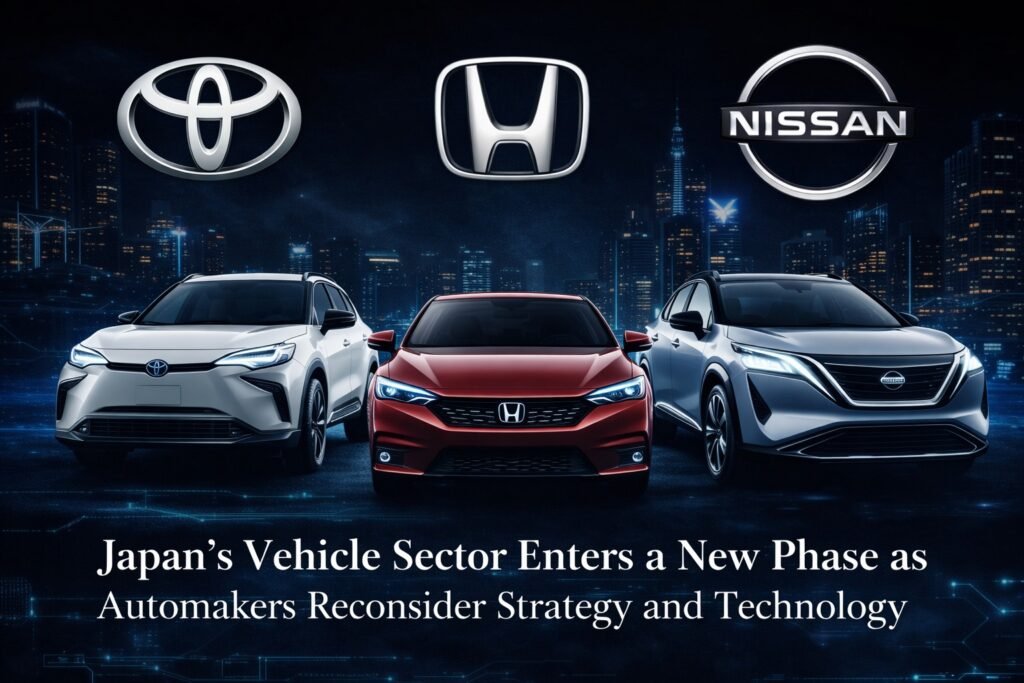
Japan’s automotive industry is at a pivotal juncture of change as major vehicle makers realign their strategies in the face of global competition, technological change, and changing consumer expectations. Long recognized for their reliability and excellence in engineering, Japan’s carmakers are navigating a landscape now shaped by electrification, sustainability goals, and evolving mobility trends.
Major manufacturers such as Toyota Motor Corporation, Honda Motor Co., Nissan Motor Co., and Suzuki Motor Corporation increasingly focus on diversified powertrain strategies rather than a single-path transition. Hybrid vehicles remain central in Japan’s domestic and export markets, while electric vehicles are building up gradual momentum with the improvement of infrastructure and growing consumer awareness. Automakers are also continuing investments in hydrogen technology, positioning Japan as a long-term innovator in alternative mobility solutions.
indications of stability in terms of domestic vehicle demand, driven by high sales of compact and fuel-efficient cars, have also been observed. Nevertheless, it has to be noted that increasing pressure, especially from global electric vehicle manufacturers, notably from China and Europe, is affecting Japanese automakers. Indeed, these developments have forced these companies to speed up their product development cycles, in addition to focusing on software integration into their products.
On the production side, an increase in the use of automation technology, robots, and smart manufacturing has been witnessed in Japanese plant floors. These technologies have enabled efficiency, cost reduction, and quality maintenance in Japanese industries despite the problem of human capital and uncertainty in the supply chain. Sustainability has emerged as a key consideration in Japan, with companies pledging to reduce carbon emissions in manufacturing and logistics.
Leadership across Japan’s automotive industry has stressed flexibility and long-term vision as the way forward. Japan has not chosen to disregard its strengths but rather incorporate them with the latest trends to stay competitive.
However, as the global auto industry continues to grow, Japan’s auto industry is caught in a dilemma of tradition versus innovation. The decisions they make today will play a crucial role in securing a place for Japan in the auto industry of tomorrow, thereby establishing its place in a competitive and technology-driven automobile industry.