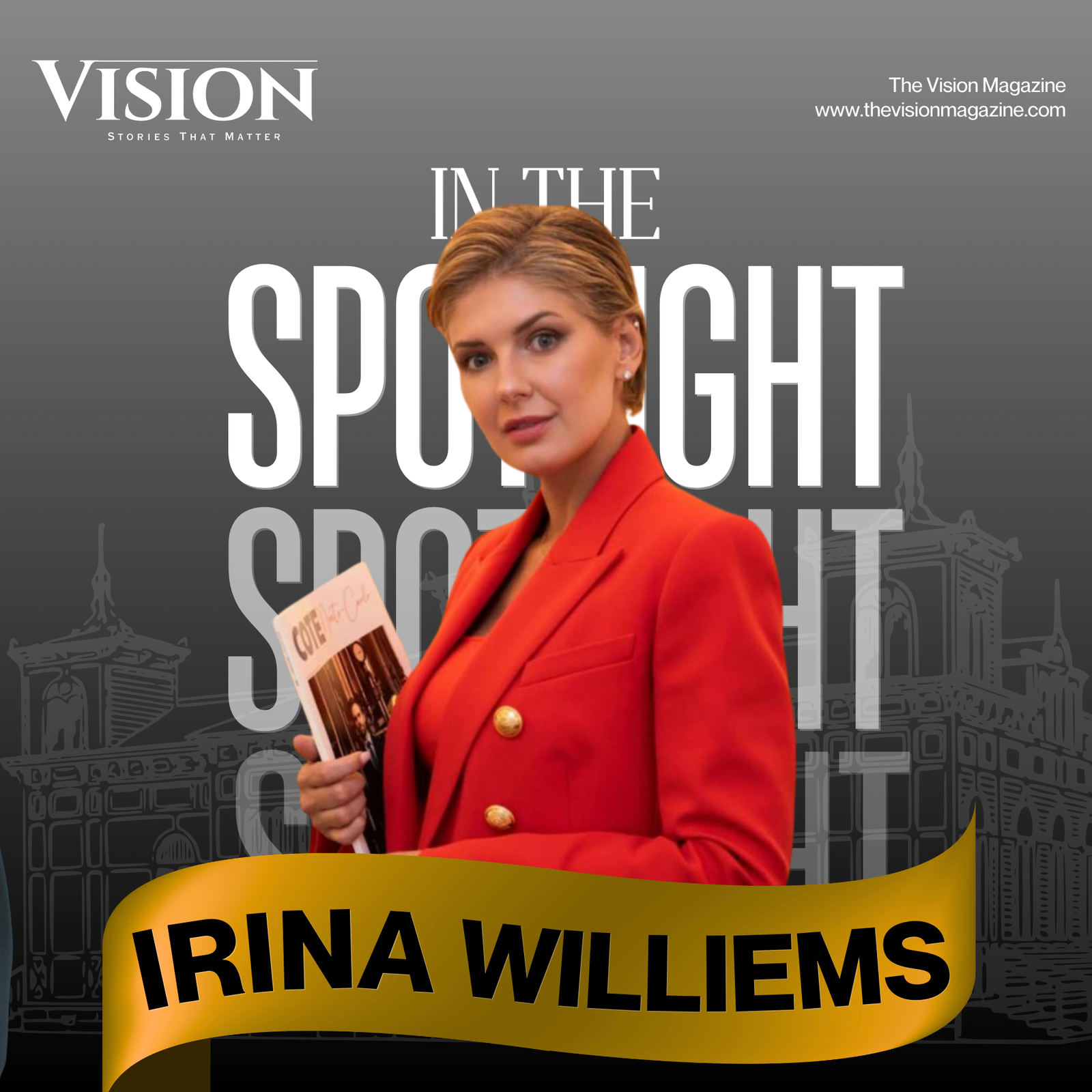


A Strategic Reassessment That Redefined Success
However, by the time Irina Willems was in her early thirties, she had already gained experience in structured professional settings that required accountability, analysis, and disciplined implementation. Looking from the outside, her professional life seemed stable and on an upward trajectory. But on the inside, she felt a sense of increasing disconnection between achievement and alignment. The tempo of professional life did not allow for reflection, sustainability, or self-awareness. Instead, she chose to make a transition that would eventually define her life’s work: she took a moment to reassess. Entering a predictable role in a state corporation, she handled complex and large-scale projects that demanded systematic planning and management. But what was so pivotal about this experience was not the role she played but the mental space it afforded her. It was the first time she started analyzing the patterns of her own choices and observing how other people coped with pressure, accountability, and ambition. She wondered why talented professionals experience burnout, why clarity eludes people in high-pressure situations, and why productivity is often achieved at the expense of one’s own stability. This stage marked the beginning of her philosophy that success has to be sustainable and that leadership has to start with internal alignment.
Exploring the Invisible Mechanics of Performance
Irina’s curiosity turned into systematic inquiry. She delved deep into understanding the effects of cognitive biases on judgment, the effects of stress on neurological responses, and the role of emotional triggers in shaping professional behavior unconsciously. She realized that most leadership theories are focused on strategy and results but never really consider the psychological framework that drives performance. Leaders are taught to deliver, but never on how to manage internal responses when under stress. Seeing this disconnect, she started to integrate neuroscience with leadership principles. She studied the effects of stress on decision-making, the effects of emotional patterns on perception, and the role of energy management in long-term productivity. The findings from her research led to a definitive conclusion: transformation is not about motivation; it is about awareness and systematic mental discipline. Without mental clarity and emotional control, the best strategies will fail. This insight would later become the foundation of her coaching model, where she would position herself not as a motivational speaker but as an internal strategic architect.
London: A Period of Intellectual Expansion
One major turning point was when Irina moved to London after meeting her husband. This marked the start of a period of extensive professional development. Surrounded by an international community with access to academic institutions, professional coaching networks, and research groups on human behavior, she further developed her knowledge of coaching approaches, psychology, meditation techniques, and neuroscience. However, her work remained analytical, not aspirational. She did not just borrow approaches; she thoroughly tested them. If an approach claimed to be resilient, she checked to see if it would withstand actual challenges. If a method claimed to increase clarity, she checked if it would remain consistent over time. It was through this evidence-based perspective that she further developed her professional philosophy: coaching needs to be practical, measurable, and sustainable. While inspiration may spark change, only systematic approaches keep it going. This London phase of Irina’s life cemented her status as a coach who prefers systematic approaches over inspirational fervor.
Formal Recognition and the Foundation of Her Practice
As her skills developed, professionals began to look to her for advice during critical transition periods – CEOs struggling with strategic decisions, entrepreneurs trying to manage growth while avoiding burnout, and leaders dealing with intricate personal and professional obligations. In recognition of the value of global standards and accountability, Irina took steps to ensure her credentials were official by graduating from the Institute of Coaching in 2020 and achieving her Professional Certified Coach (PCC) credential from the International Coaching Federation. This achievement put her among a global community of certified professionals who adhere to high standards of ethical and systematic coaching. However, her greatest credibility came from the tangible results she achieved with her clients. Her work involves strategic self-awareness, emotional management, effective performance planning, and decision-making clarity. Instead of providing immediate insights, she establishes lasting frameworks that enable leaders to function with poise and precision. Clients have often described her work as “stabilizing” – not emotionally taxing, but profoundly illuminating. She doesn’t raise the stakes; she clears the clutter.
Integrated Leadership: Practice Beyond Theory
Today, living in the Principality of Monaco after many years in London, Irina lives the integration she teaches. As a mother of four, she faces challenges that demand endless prioritization and time management. Her life outside work underscores her conviction that balance is not happenstance; it is deliberately engineered. She keeps on extending her knowledge in neuroscience and leadership psychology, speaking at conferences and professional forums where systematic thinking is prized over showmanship. Her participation in these forums is a statement of quiet power – composed, analytical, and balanced. Unlike many modern-day coaching personalities who depend on charisma and high visibility, Irina’s power derives from credibility and consistency. She shows that leadership is not about asserting power or keeping the momentum but about keeping one’s own balance amidst external turmoil.
Redefining Influence in Modern Coaching
In 2026, as the coaching sector continues to grow in terms of reach and influence across the world, with many coaches leveraging their personalities and stories of rapid transformation, Irina Willems is a breath of fresh air in terms of discipline and focus. She is a symbol of what coaching should stand for in terms of emphasizing clarity over charisma and sustainability over speed. Her coaching philosophy is based on the belief that transformation is a strategic process that is anchored in awareness, informed decision-making, and implementation. She coaches people to understand their internal processes, manage their emotional reactions, and build systems that prevent burnout instead of trying to recover from it. In a world where professional success is often measured by speed, Irina’s coaching is a call to deliberate growth. This is why she is one of the most influential women coaches of 2026, not for her popularity, but for her impact. Her story shows that influence is not just about visibility but the stability and growth that one helps people achieve through self-alignment.
For Irina, transformation is not an emotional impulse—it is a strategic process based on awareness, choice, and consistent action.
— Irina Willems