


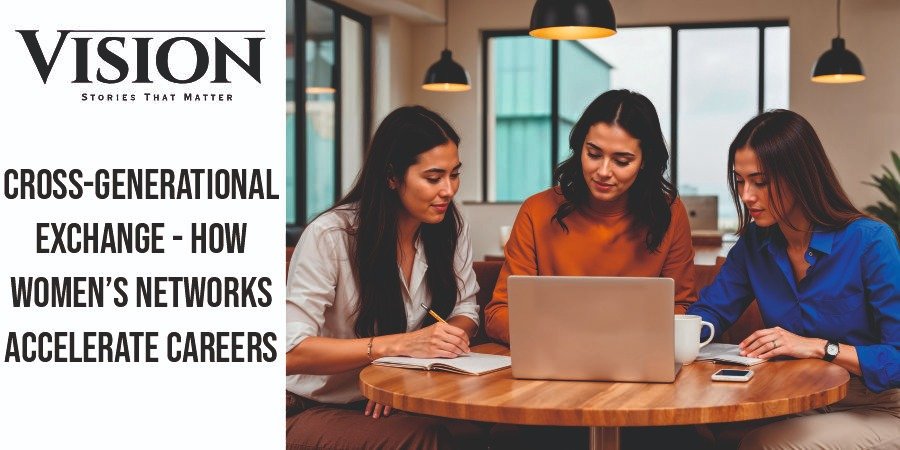
Career growth rarely depends on skill alone. Relationships often shape who hears about new opportunities, receives meaningful feedback, or gains visibility before an important promotion. For women, cross-generational networks create access to experience, sponsorship, and fresh perspectives that formal training rarely provides.
A cross-generational network connects early-career professionals with experienced leaders while encouraging knowledge to flow in both directions. Senior women share leadership lessons, while younger professionals contribute digital expertise, changing workplace expectations, and emerging industry trends. This exchange creates stronger careers for every generation.
Research supports its impact. McKinsey’s Women in the Workplace 2024 found that many organisations have reduced formal mentorship and sponsorship programmes for women, even though these initiatives remain important for career progression. Formal sponsorship programmes tailored to women dropped from 31% in 2017 to 16% in 2024.
Why do cross-generational networks matter?
Every career reaches moments when talent alone cannot open the next door. Advice from someone who has already navigated similar challenges often makes the difference.
Experienced professionals help younger women:
- Avoid common career mistakes.
- Build confidence during leadership transitions.
- Expand professional networks.
- Negotiate salaries and promotions.
- Navigate workplace politics.
The exchange works both ways. Younger professionals introduce senior leaders to emerging technologies, evolving workplace culture, digital communication, and changing consumer behaviour. The result is continuous learning rather than one-way mentoring.
Unlike traditional networking, cross-generational relationships develop long-term trust instead of transactional connections.
How do women’s networks create career opportunities?
Professional networks create visibility. Visibility creates opportunity.
Many career opportunities never reach public job boards. Leadership projects, board positions, speaking invitations, and strategic introductions often come through trusted relationships.
McKinsey research highlights the importance of sponsorship alongside mentoring. Every additional sponsor increases promotion chances by around 10%, while professionals with four or more sponsors are five times more likely to be promoted.
Sponsors differ from mentors.
A mentor offers advice.
A sponsor actively recommends someone for promotions, introduces them to influential decision-makers, and advocates for their advancement.
Cross-generational women’s networks naturally create both.
A senior executive may recommend a promising young manager for a leadership committee. Years later, that manager may connect the executive with emerging markets, digital communities, or innovative partnerships.
Everyone benefits.
What makes knowledge exchange valuable across generations?
Different generations solve different problems.
Senior leaders bring decades of experience in leadership, negotiation, crisis management, and long-term strategy. Younger professionals understand digital platforms, artificial intelligence, remote collaboration, and changing customer expectations.
Combining both perspectives leads to stronger decisions.
For example, a marketing executive with twenty years of experience understands brand positioning and customer trust. A younger colleague may recognise how Gen Z discovers brands through short-form video or creator partnerships. Together, they create more effective campaigns than either could alone.
Cross-generational learning replaces assumptions with practical insight.
How can women build meaningful cross-generational relationships?
Strong professional relationships rarely happen by accident.
They develop through curiosity, consistency, and generosity.
Practical ways to build them include:
- Join professional associations and women-focused leadership communities.
- Attend industry conferences and networking events.
- Participate in mentoring or reverse mentoring programmes.
- Stay connected after introductions through regular conversations.
- Share useful resources instead of reaching out only when help is needed.
- Offer value regardless of career stage.
Many professionals hesitate to contact senior leaders because they fear rejection. In reality, experienced executives often welcome thoughtful conversations when approached respectfully and with genuine interest. Consistency matters more than frequency.
A meaningful quarterly conversation often creates greater impact than dozens of brief online interactions.
What challenges can cross-generational networks overcome?
Many women encounter barriers that technical skills alone cannot solve.
These include:
- Limited access to leadership circles.
- Fewer sponsorship opportunities.
- Confidence gaps during career transitions.
- Lack of visible role models.
- Unwritten workplace expectations.
Cross-generational communities help reduce these barriers by creating safe spaces to discuss experiences openly.
According to McKinsey’s Women in the Workplace 2025 findings, women receive less sponsorship than men, particularly at entry level. Employees with sponsors have been promoted at nearly twice the rate of those without sponsorship.
These findings reinforce why strong professional relationships remain essential for long-term advancement.
How can organisations encourage cross-generational collaboration?
Successful organisations create structures that encourage relationships across career stages.
Effective initiatives include:
- Formal mentoring and sponsorship programmes.
- Reverse mentoring between junior and senior employees.
- Cross-functional leadership projects.
- Internal networking events.
- Women’s employee resource groups.
- Leadership development circles.
The benefits extend beyond individual careers.
Deloitte’s Women @ Work 2024 survey found that women working in organisations leading on gender equality reported significantly higher loyalty, productivity, motivation, and belonging than those in less inclusive workplaces.
When employees feel supported, organisations retain more experienced talent while developing future leaders.
Can cross-generational exchange determine the future of leadership?
Leadership has become more collaborative than hierarchical.
Today’s challenges require adaptability, emotional intelligence, technological awareness, and diverse perspectives. No single generation possesses every answer.
Cross-generational women’s networks create environments where experience meets innovation. Senior professionals preserve institutional knowledge while younger leaders introduce new ways of thinking. Together, they strengthen organisations and expand opportunities for future generations.
The strongest careers rarely grow in isolation. They grow through conversations, shared experience, trusted guidance, and relationships built over time. For women across every stage of their careers, cross-generational exchange remains one of the most powerful ways to build lasting leadership and create opportunities that extend far beyond a single promotion.